Pogue’s Run
Turtles All the Way DownPogue’s Run connects an unfinished public-works project, an improvised art venue, and a discovery by Aza Holmes and Daisy Ramirez. Its tunnel was meant to divert water from the White River, but the abandoned work leaves the underground passage opening onto an unexpected view of Indianapolis—and gives the friends a crucial clue in the Russell Pickett disappearance.
Waterway and unfinished project
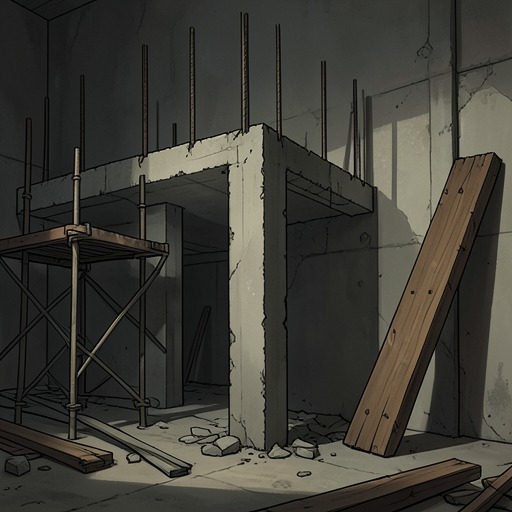
Pogue’s Run is described in relation to the White River: the tunnel empties into the river, and Pickett Engineering had been hired to expand the passage. The work was never completed. At its open end, a small trickle that was supposed to be diverted from the White River instead drips down into the river, two stories below. The unfinished infrastructure is therefore not just a remnant of a project; its visible failure shapes the place Aza and Daisy explore.
The tunnel’s condition is palpable during their passage through it. The smell of rotting garbage and unflushed toilets worsens before improving as the friends approach open air. The passage leads to a gray-lit opening, where the incomplete construction exposes both the river below and the city beyond.
An underground art venue
Pogue’s Run also supplies an unlikely setting for Underground Art, a one-night gallery show organized by the arts collective Known City. The event takes place in part of the tunnel and has permission, despite its underground character. Mychal Turner submits photographic montages of exonerated prisoners, giving Daisy a personal reason to urge Aza to attend: her friend’s work is in the show.
The gallery’s use of an unfinished tunnel brings art into the same space as the incomplete water project. What might otherwise remain hidden infrastructure becomes a place for public display, while the setting retains the signs of the project’s failure and the waterway it was meant to alter.
The opening and the city above
At the tunnel’s edge, the friends encounter an unusually expansive view of Indianapolis. Below them are moss-covered boulders, frothy water at the base of a waterfall, power lines sagging across the river, and trees leaning over the water; in the distance, a grain mill sits in the moonlight among the neon signs of Speedway and Chase Bank. The contrast is striking: the city is usually too flat to offer a view from above, but the unfinished tunnel places the friends at an elevated vantage point after dark.
That beauty sits uneasily beside the tunnel’s grimy approach and failed purpose. Daisy jokes about preserving the dirty water because she wants to return to the view years later, even as she acknowledges Russell Pickett’s corruption and incompetence. The scene makes the landscape compelling without making the unfinished project seem successful.
The jogger’s mouth
The tunnel’s connection to the river becomes a clue when Aza asks where Pogue’s Run begins and where its mouth is. Daisy explains that a river’s mouth is where it ends, not where it begins, and realizes that they are at The jogger’s mouth. The location’s physical geography thus resolves a question that had been tied to the friends’ investigation.
The discovery changes the mood of the scene. Aza immediately feels unsettled by the thought that Pickett might be behind them and could push them from the tunnel’s edge into the river. Pogue’s Run shifts, in a moment, from a strange art venue and scenic overlook into a place associated with danger and the missing man’s trail.